
Can the Cost of Living Crisis be explained by looking at one chart?
Well, let’s take a look at a chart of gold prices.
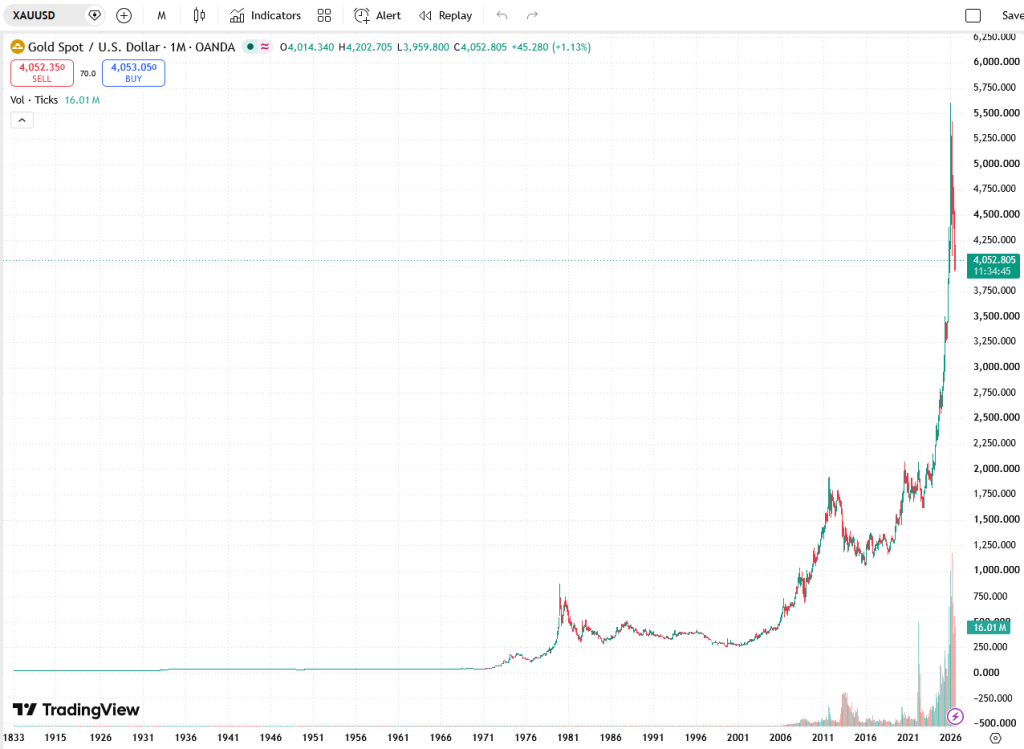
Now turn it upside-down (it’s still the same one chart, I promise)…
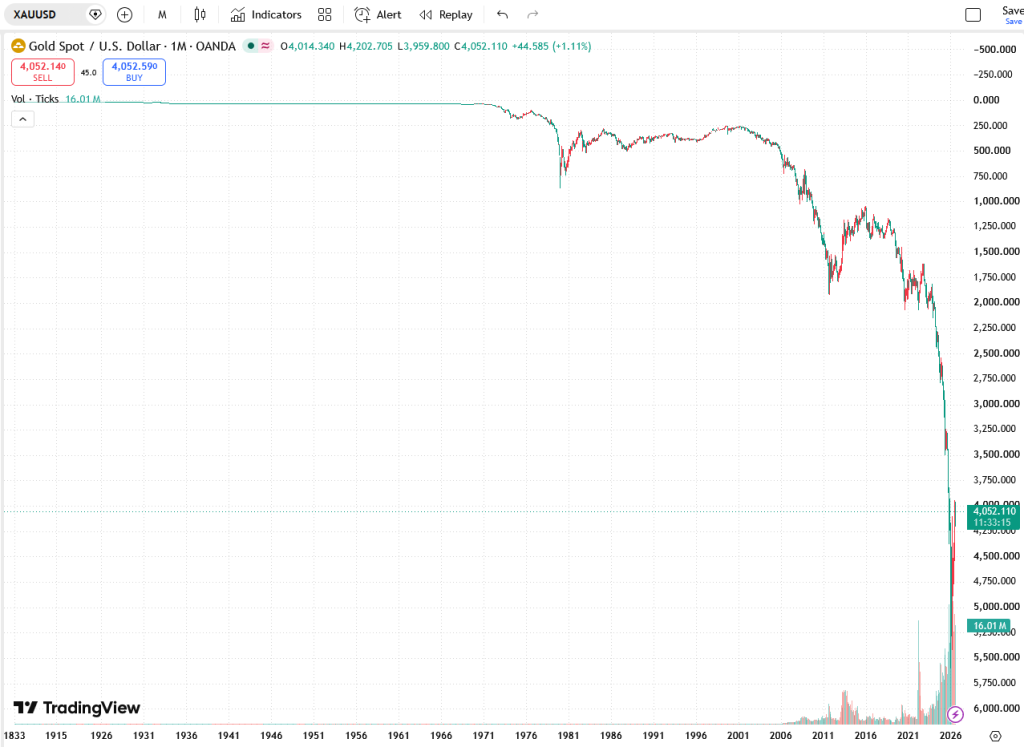
What are you looking at in that inverted gold price chart?
That’s your national currency dying!
And that is a very simple way of explaining the cost of living crisis.
It’s not the prices of everything going up…
It’s the purchasing power / value of your national currency dropping like a lead balloon.
Why?
Simple supply and demand dynamics.
There’s too much national currency, compared to the amount of goods.
But, how and why could there be too much national currency?
Well, “money printer go brrr” (video above) is the go-to meme to answer that, but there’s a little more to it.
Did you know that banks don’t actually lend you other depositor’s money?
They are in the business of purchasing securities and extending credit.
When you take out a loan from a bank, you sign a loan contract.
That loan contract, in financial terms, is called a “promissory note”.
You signed a promise to pay a certain amount for a certain length of time.
That written promise is valuable to the bank, but not very valuable to the seller of the house or car that you want. That seller probably wants the proceeds of the sale now, not your promise to pay them back over 5, 10, maybe 30 years.
The bank “purchases” the promissory note (loan contract, which is a “security”) and swaps it for new funds (that the bank created) that are spendable now.
In other words, every home loan, car loan, personal loan, credit card, etc. every commercial bank loan creates new commercial bank money in the economy.
If that loan is used productively (to create new goods in the economy), then the ratio of money to goods is more likely to remain in good balance.
On the other hand, if more and more unproductive loans (E.G. loans to consume something rather than produce something) are extended, then there’s more money entering the economy than there are goods being produced. This reduces the value of the existing money in the economy and increases the price of the goods (and cost of living).
So now you know there’s a little more to the rise in inflation and cost of living pressures than just Jerome Powell or any Federal Reserve or Treasury figurehead cranking the printing press into overdrive.
Actually, the endless consumerism of people with peasant (or median)-sized wages buying king-sized cars and televisions on credit plays a big part here too.
Yes, as much as we love to blame the rich, the average person with average spending habits is not as innocent as they might think (even if they had no idea that new loans inflate the money supply), sorry!
Now while you’re thinking about downsizing that car and swapping your stone benchtop turnkey house for a fixer-upper, I’ll be watching J-Powell crank that money printer and rocking out to those godly heavy metal licks. \m/(><)\m/
Leave a Reply